How to Get More Leads for Contractors in 2026 With a Website Built for Local Search
Most contractors do not have a traffic problem. They have a conversion problem, a local visibility problem, or both.
I have seen the same pattern across home service categories for years. The phone rings unevenly. Some weeks are packed, others are thin. The website looks respectable enough, but it does not pull its weight. It may rank for a few branded terms. It may even get visitors. Still, too many of those visits end without a call, a form fill, or a booked estimate.
If you want to understand how to get more leads for contractors in 2026, start by treating the website as part of a local search system, not as a digital brochure. Your site, your Google Business Profile, your mobile performance, your service area setup, your reviews, and your lead handling all work together. When one piece breaks, the whole machine underperforms.
That matters whether you are focused on plumbing website design, electrician website design, foundation repair website design, water damage restoration website design, kitchen and bath remodeling website design, solar company website design, or fence contractor website design. The categories differ, but the local search fundamentals are surprisingly consistent.
A lead-generating contractor website does more than look polished
Plenty of contractor sites are visually clean and still fail. They open with a vague headline, bury the phone number, load slowly on mobile, and leave Google with a fuzzy picture of where the company works and what services it actually provides.
A contractor website that generates leads needs to do three jobs at once.
First, it must make sense to a local customer who needs help now or is comparing options. Second, it must make sense to Google, which needs clear signals about services, location, and business details. Third, it must remove friction. If someone has to hunt for your phone number, wait for images to load, or guess whether you serve their town, you have already lost ground.
This is where many contractor lead generation website projects go wrong. Too much energy goes into branding details and not enough into the practical questions a prospect asks in the first few seconds. Do you do the job I need? Do you work in my area? Can I reach you right now? Can I trust you?
When those answers are easy to find, lead flow tends to improve. Not magically, and not overnight, but predictably.
Why local search is still the strongest channel for many home service businesses
For service-area contractors, local search remains unusually high intent. People searching for a plumber, electrician, restoration company, remodeler, or foundation specialist are often close to making contact. They are not looking for industry thought leadership. They are looking for help, pricing direction, availability, and confidence.
That is why local SEO for home service businesses is less about chasing broad traffic and more about matching search intent with clean local signals. If the site says one thing, the business profile says another, and the service areas are vague, your visibility and conversions both suffer.
Google makes several parts of this process fairly clear. A verified Business Profile helps customers find a business on Search and Maps. It can show hours, phone, website, and send people to additional destinations like booking links or social profiles. For a contractor, that means your website is not competing with your profile. It is supporting it.
The practical effect is simple. A homeowner may discover you in Maps, skim reviews, click through to the site, and decide in under a minute whether to call. If the website is slow, thin, or confusing, the profile did the hard work and the site wasted it.
The local search setup that contractors often miss
The strongest local websites are usually not the most complicated. They are the most precise.
For service-area businesses, Google allows a Business Profile with one central office or location and a designated service area. If you do not meet customers at your address, the address should be hidden, and the profile should use a phone number or website that represents that individual location. That matters because many contractors still copy setups that fit walk-in retail businesses more than field service companies.
Service areas also need to be accurate and specific. Google supports defining them by cities, ZIP codes, or other places served. This sounds minor until you look at how many contractor sites use generic claims like “serving the entire region” without ever naming the places they actually work. That is not helpful to searchers, and it is not a clear local signal.
On the website side, the same principle applies. If your crews regularly serve certain cities, neighborhoods, or ZIP clusters, the site should reflect that with useful local detail. Not doorway pages filled with spun text, but honest pages that explain the service, the territory, and how to contact you.
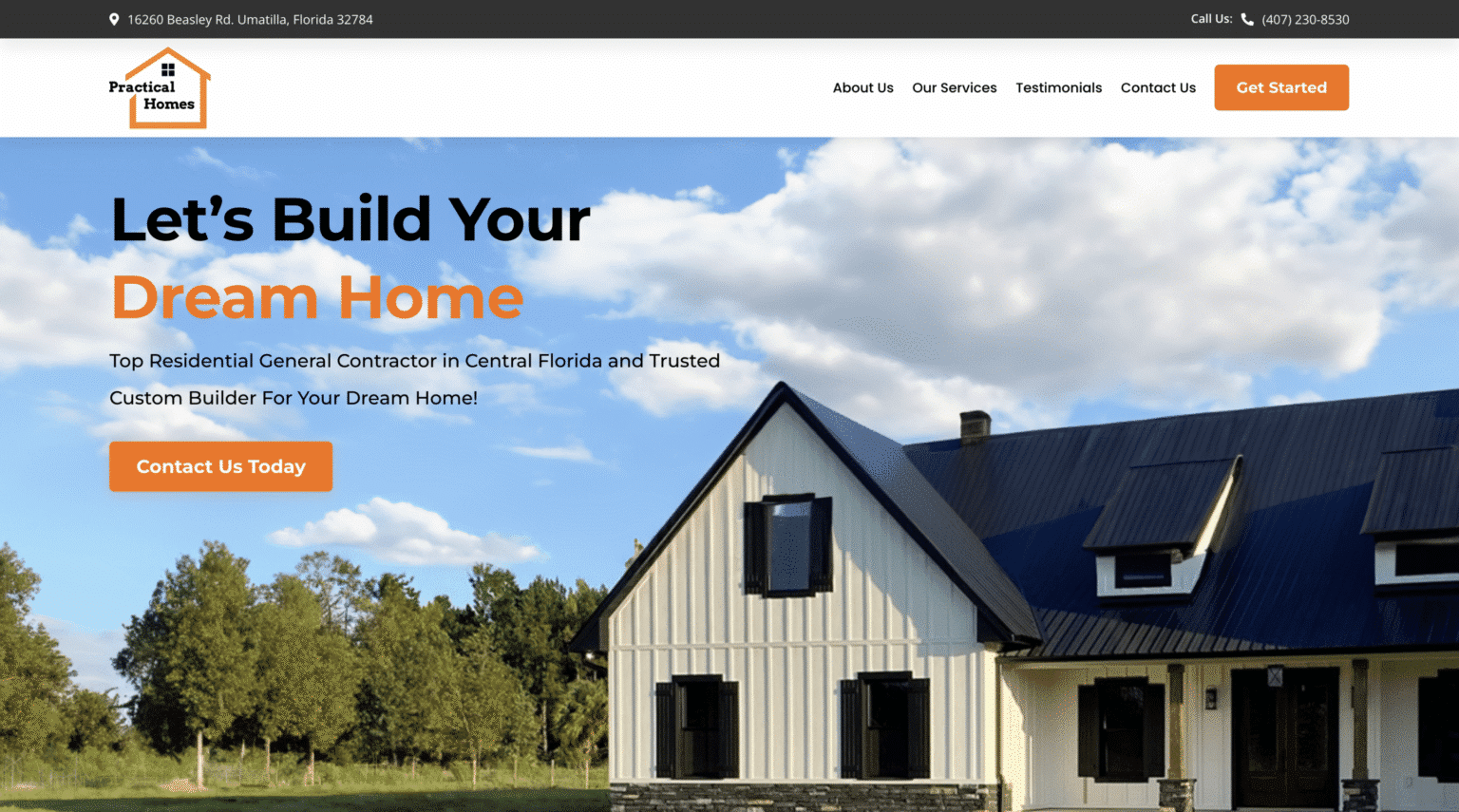
A kitchen and bath remodeling website design project, for example, usually needs different local depth than a water damage restoration website design project. Restoration is urgent and often needs fast phone-first pathways. Remodeling tends to involve more comparison, more project photos, and more time spent evaluating fit. Both need local clarity, but the path to conversion is different.
If your site gets traffic but not calls, look here first
Some websites have enough visibility to generate business and still underperform because the fundamentals are off. Before spending more on ads or more on content, it helps to check the basic friction points.
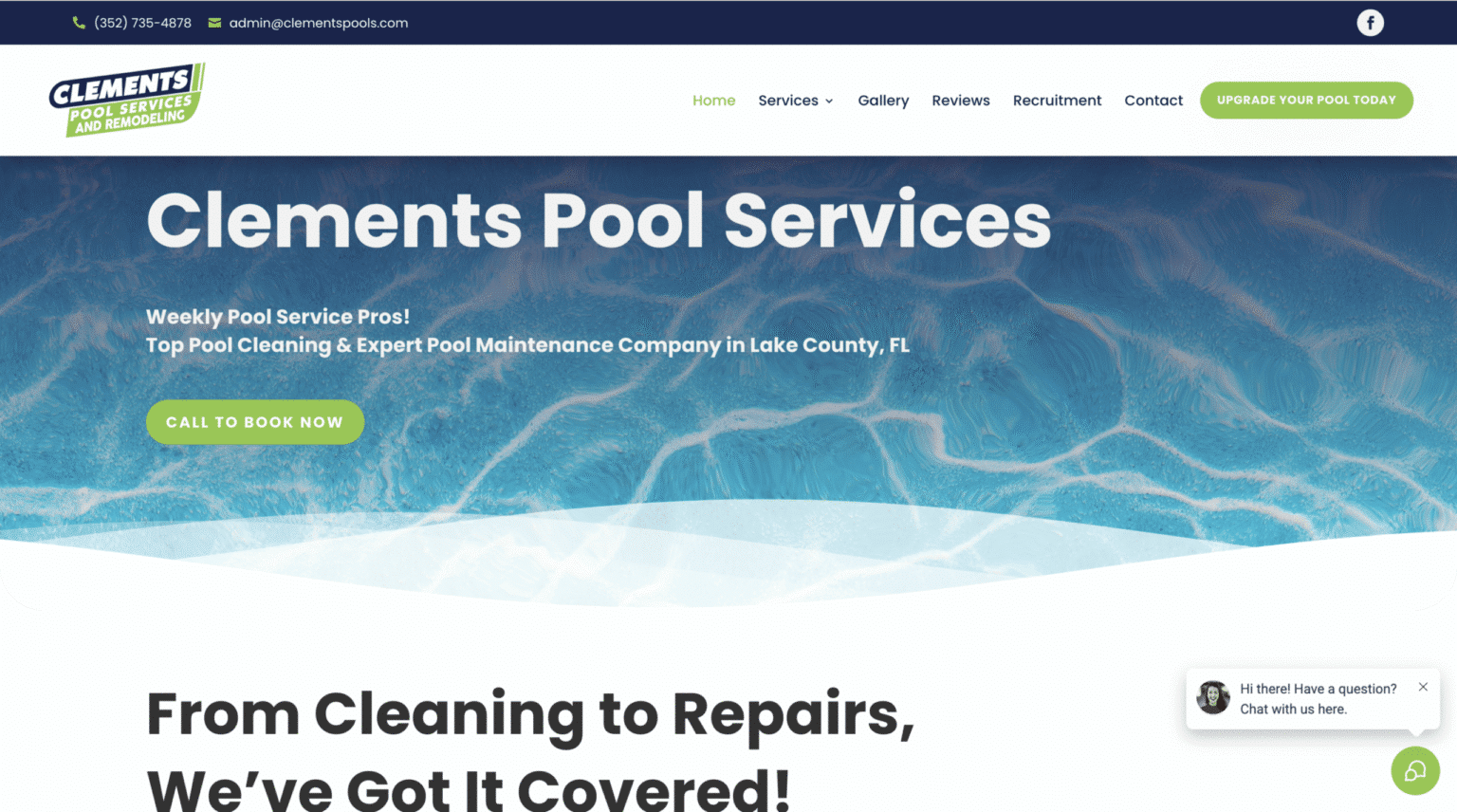
- The phone number is hard to find on mobile or only appears low on the page.
- Service areas are vague, missing, or inconsistent with the Business Profile.
- Pages load slowly, especially the homepage and key service pages.
- The site is accessible to users but not fully accessible to search engines for indexing.
- Reviews and trust signals exist, but they are absent from the pages where prospects make contact decisions.
Those problems show up across trades. I have seen plumbing website design projects where the emergency call path was hidden behind a menu. I have seen electrician website design builds with excellent visuals but almost no geographic specificity. I have seen foundation repair website design pages explain technical methods in detail while skipping the basic local question: where do you actually work?
The remedy is rarely glamorous. It is usually a matter of improving structure, speed, and clarity.
Mobile performance is no longer a nice extra
For many contractors, the first visit happens on a phone. Often it happens in a driveway, at a jobsite, during a work break, or in a stressful household situation. People are distracted. They are impatient. They are comparing options quickly.
Google’s recommended Core Web Vitals thresholds give a useful benchmark. Largest Contentful Paint should be under 2.5 seconds. Interaction to Next Paint should be under 200 milliseconds. Cumulative Layout this website Shift should be under 0.1. You do not need to turn every contractor into a technical SEO specialist to understand the business meaning here. Fast loading, quick responsiveness, and stable pages create less friction. Less friction usually means more inquiries.
Page experience also includes mobile friendliness, HTTPS, and avoiding intrusive interstitials that get in the way of the main content. Many contractor sites still lose points on exactly these basics. Oversized popups, sticky banners that consume half the screen, slow hero images, and clunky mobile forms can kill momentum.
This matters even more for urgent categories. A water damage restoration website design has very little room for delay. A visitor dealing with an active leak or flood issue is not going to tolerate a site that stutters, shifts, and asks for too much before showing a number.
On the other hand, a solar company website design or kitchen and bath remodeling website design may involve longer consideration, but speed still matters because it affects first impressions and search visibility. Slow sites do not just frustrate users. They waste expensive attention.
Your Google Business Profile and website should reinforce each other
A lot of contractors think of the website and the Google Business Profile as separate marketing assets. That separation causes leaks.
Google Business Profile for contractors should be treated as a front door. Your website is what the customer sees when they step inside. The phone number, service area, hours, and website destination should align. If the profile points to a homepage that barely mentions the primary service or the main city cluster, that weakens continuity.
A strong setup usually feels seamless. A prospect sees the profile, confirms the category and reviews, clicks to the site, and lands on a page that matches the service they expected. If they searched for electrical panel work in a specific city, the site should not dump them into a generic homepage with a slogan and a stock photo. It should continue the conversation.
This is especially useful for specialized categories. A fence contractor website design may need service pages that separate privacy fence work, repairs, and installations by area. A foundation repair website design may need pages that explain the problem types the company handles in the places it actually serves. Those details help users, but they also help Google understand relevance.
Reviews matter, but the process has to stay clean
Review generation is one of the clearest trust levers in local search, and it is also one of the easiest places to make avoidable mistakes.
Google’s guidance is straightforward. Reviews should reflect genuine experiences. Incentives for reviews are prohibited. Businesses can ask customers to leave reviews, use a Google review link or QR code, and should respond promptly.
There is a practical lesson in that. Contractors do not need gimmicks. They need a repeatable ask.
The best review systems I have seen are simple and disciplined. At the close of a job, the office sends a short message with the review link. Field staff mention it once, naturally, without pressure. Someone on the team monitors new reviews and responds promptly. Over time, that creates a more trustworthy public record than sporadic campaigns ever do.
A remodeler might ask after project completion and final walkthrough. A restoration company may need to be more careful with timing because the customer is often stressed. An electrician may ask right after a clean service call and successful fix. The sequence changes by trade, but the rule stays the same: ask honestly, make it easy, and never offer incentives.
The website needs to be indexable, not just attractive
This sounds obvious, but it gets overlooked more than it should. Pages must be publicly accessible and not blocked if you want them indexed by Google. Contractor sites are sometimes rebuilt with staging leftovers, blocked sections, or accidental noindex settings that quietly suppress visibility.
If a service page is important for lead generation, it should not be hidden behind technical errors, orphaned in the site structure, or buried so deeply that neither users nor search engines can find it. A contractor lead generation website has to be crawlable and usable.
Structured data can help here as well. Google supports local business structured data for details like hours, address, phone, departments, and geo information. That markup does not replace good page content, but it can help Google better understand local business information. For multi-location or more operationally complex contractors, that clarity can be useful.
The key is not to treat structured data as a silver bullet. It is support work, not a substitute for solid fundamentals.
Different trades need different page strategies
The biggest mistake in contractor web design is copying one trade’s site architecture into another trade without adjusting for buying behavior.
A plumbing website design often has to support both urgent and non-urgent demand. Burst pipe and no-hot-water searches behave differently from water heater replacement research. That usually means the site needs fast call access alongside service pages that answer common decision questions.
An electrician website design has a similar split. Emergency troubleshooting and planned upgrades are not the same search journey. The site should not force both into one generic page if the company actively markets both services.
A kitchen and bath remodeling website design needs more proof and more patience. Visitors often want to browse, compare, and get comfortable before reaching out. In that case, clear service pages, visible service areas, and strong project credibility matter more than aggressive urgency.
A water damage restoration website design is more immediate. The top of the page has to make contact effortless. Mobile speed becomes even more important. Any visual polish that slows down action is a bad trade.
A solar company website design often sits further up the consideration curve. Prospects may want to understand process, fit, and next steps before committing to a call. That does not remove the need for local specificity. It makes clarity even more important.
Lead handling is part of lead generation
A surprising number of contractors focus on rankings and ignore response speed. That creates a blind spot.
Google’s lead guidance around ads and local services makes one thing clear: missed-call handling matters, and replying quickly to leads is supported directly in Google’s lead management workflows. You do not need paid lead platforms to understand the larger lesson. A slow response can waste demand you already earned.
A website can increase opportunities, but the office has to catch them. If calls roll to voicemail too often, if forms sit unanswered, or if after-hours inquiries disappear until the next afternoon, lead volume on paper will not match revenue in practice.
That operational side belongs in any serious conversation about how to get more leads for contractors. More demand only helps if your process captures it.
What to tighten first if you want better results in 2026
If I were reviewing a contractor site with weak lead flow, I would usually start with the shortest path to clarity and fewer leaks.
- Make the service area setup precise on both the website and the Google Business Profile.
- Ensure the site is mobile friendly, secure with HTTPS, and free of intrusive interruptions.
- Improve Core Web Vitals on the pages that attract local traffic and drive calls.
- Ask for genuine reviews consistently, using a simple link or QR code, then respond promptly.
- Confirm that key pages are publicly accessible, indexable, and supported by accurate local business details.
That is not flashy advice, but it tends to move the needle because it fixes the chain, not just one link.
What a strong local page actually feels like
A good local service page does not need hype. It needs relevance.
If you serve a city, say so clearly. If the page is about a specific service, keep the headline specific. If customers usually call before filling out a form, make the phone path obvious. If service is by appointment and you do not meet customers at the address, keep that consistent with the Business Profile setup.
The page should answer practical questions without wandering into filler. What do you do, where do you do it, how can I contact you, and why should I trust you with this job? Every extra second it takes a visitor to find those answers raises the chance that they back out and call someone else.
That is true for a fence contractor website design just as much as it is for a restoration or electrical site. The tools differ. The customer psychology does not change that much.
The contractors who win locally tend to be easier to understand
When people talk about local SEO for home service businesses, they often make it sound mysterious. It usually is not.
The best-performing contractor sites tend to be the ones that remove ambiguity. They are fast enough on mobile. Their pages are accessible and indexable. Their Business Profile is verified and aligned with the site. Their service areas are specific. Their reviews are genuine and actively managed. Their lead handling is responsive.
That is what a contractor website that generates leads looks like in practice. Not trend chasing. Not bloated redesigns. Not generic content sprayed across fifty towns.
Just a website built for local search, connected to a clean Google Business Profile for contractors, supported by real reviews, and disciplined enough to make it easy for the right customer to say yes.
In 2026, that is still the most dependable path to better lead flow for most home service companies. The tools have evolved, but the core principle has not. Be visible where local customers search, be clear about what you do and where you work, and make contacting you the easiest part of their day.